
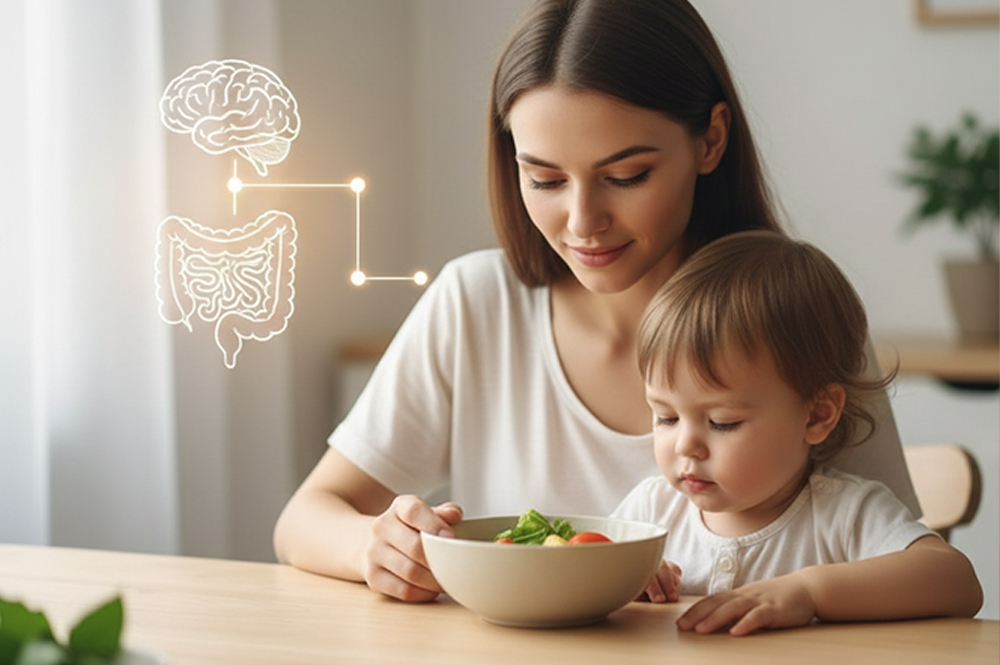
As a parent of a child with Autism Spectrum Disorder (ASD), you’ve probably spent hours reading about therapies, diets, and supplements. But here’s something that most conventional discussions overlook: your child’s gut health could be one of the most powerful keys to unlocking their development.
Modern science is finally catching up with what Ayurveda has known for thousands of years — the gut and brain are deeply connected. This link, known as the Gut–Brain Axis, plays a vital role in Autism. Many children with Autism suffer from digestive issues: constipation, loose stools, bloating, food intolerances, picky eating. These are not minor problems — they directly affect speech, mood, learning, and behaviour.
In this article, we’ll break down:
- Why gut health is central in Autism.
- How poor digestion impacts the brain.
- The Ayurvedic perspective on gut–brain healing.
- What practical steps you can take as a parent.
The Overlooked Gut Problems in Autism
Parents often focus only on therapies and speech development. But have you noticed these patterns in your child?
- Chronic constipation or diarrhea
- Bloated stomach
- Food cravings (often for sweets or junk food)
- Food intolerances (milk, wheat, gluten)
- Poor appetite or extreme picky eating
These are not “random” issues. They’re signs that the gut is not functioning properly. And when the gut is weak, the brain suffers too.
Research shows that children with Autism often have imbalances in gut bacteria (microbiome). Instead of good bacteria that aid digestion, harmful bacteria take over, producing toxins.
These toxins travel to the brain, leading to:
- Poor focus
- Hyperactivity
- Irritability and aggression
- Delayed speech
In Ayurveda, this is described as “Ama” — toxic buildup due to poor digestion. Ama clogs the channels of the body and blocks mental clarity.
The Science Behind the Gut–Brain Axis
The gut is often called the “second brain.” It contains millions of neurons and produces neurotransmitters like serotonin and dopamine — the same chemicals that regulate mood and behaviour in the brain.
Here’s how the gut–brain axis works:
- Food enters the gut.
- If digestion is weak → food remains partially digested → toxins (ama) form.
- These toxins enter the bloodstream → reach the brain.
- Brain inflammation begins → affecting neurons and neurotransmitters.
That’s why you may notice that after eating certain foods (like sugar, chips, processed food), your child’s hyperactivity or tantrums worsen. The gut is directly influencing the brain.
How Ayurveda Explains the Gut–Brain Link
Ayurveda recognized this connection thousands of years ago. The classical texts clearly mention:
- Rasa (nutrition from food) nourishes the body and the mind.
- If digestion (Agni) is weak → undigested food (Ama) forms → mind becomes disturbed.
- Balance in Doshas (Vata, Pitta, Kapha) is essential for both gut and brain.
In Autism, Ayurveda sees a disruption in:
- Agni (digestive fire) → leading to indigestion and toxin buildup.
- Vata imbalance → causing hyperactivity, speech delay, scattered focus.
- Kapha imbalance → causing sluggishness, lack of interest, repetitive behavior.
The solution? Strengthening digestion, cleansing the gut, and nourishing the brain simultaneously.
Signs Your Child’s Gut is Affecting Their Brain
As a parent, you can often observe this at home. Ask yourself:
- Does my child get cranky or aggressive after eating sweets or fried food?
- Does constipation lead to more irritability or restlessness?
- Do loose stools make my child lethargic and unfocused?
- Is there a noticeable difference in behaviour when the gut is clear vs. when it is blocked?
If the answer is yes, then your child’s gut health is deeply influencing their Autism symptoms.
Steps to Heal the Gut in Autism (Practical Tips)
1. Avoid Foods That Worsen Gut Toxins
- Packaged snacks, biscuits, chips, colas
- Excessive dairy (especially processed milk and cheese)
- Refined sugar
- Fast food, fried items
- Excessive gluten (wheat products like bread, pasta)
These foods create Ama and worsen hyperactivity.
2. Introduce Sattvic, Easy-to-Digest Foods
- Warm, freshly cooked meals
- Moong dal, rice, cooked vegetables
- Fruits like papaya, apple, pear
- Ghee in small amounts (improves absorption and brain nourishment)
- Herbal teas (fennel, cumin, ajwain water for digestion)
3. Use Ayurvedic Herbs for Gut Cleansing
Certain herbs are known for supporting digestion and reducing toxins in Autism:
- Haritaki – gently cleanses intestines, reduces constipation.
- Triphala – balances digestion, detoxifies the gut.
- Guduchi (Giloy) – reduces inflammation, strengthens immunity.
- Brahmi & Shankhpushpi – while known for brain health, they also calm gut-related hyperactivity.
(Important: Always take Ayurvedic herbs under a qualified doctor’s supervision, as dosage and combinations vary for each child.)
4. Focus on Gut-Friendly Oils and Nasya
- Ayurvedic medicated oils (like Brahmi oil, Mahanarayan oil) for massage calm the nervous system and improve digestion indirectly.
- Nasya (herbal oil drops in the nose) help clear toxins from the head and improve focus.
5. Create a Gut–Friendly Routine
- Early dinner (by 7:30 pm).
- Consistent meal timings.
- Adequate water intake (warm water, not cold).
- Regular bowel movement monitoring.
- Adequate physical activity (play, yoga, simple exercises).
Success Stories of Gut Healing in Autism
- Case 1: 6-year-old boy, Bangalore
Chronic constipation for 2 years. Hyperactive, no speech. Within 2 months of Ayurvedic gut cleansing medicines and diet correction, constipation reduced, hyperactivity came down, and therapies began working more effectively.
- Case 2: 4-year-old girl, Gurugram
Constant loose stools, food intolerance to milk and wheat. Ayurvedic diet, herbal gut medicine, and probiotics restored her gut balance. Within 4 months, her tantrums reduced and eye contact improved.
- Case 3: 7-year-old boy, Dubai
Severe sugar cravings and aggression. After reducing sugar and starting Ayurvedic detox, his aggression decreased, sleep improved, and speech started progressing.
Why Gut Healing Must Go Hand-in-Hand With Therapies
It’s important to note: Ayurveda doesn’t say “stop therapies.” Therapies like Speech, OT, and ABA are still essential. But unless the child’s gut is balanced, therapies will remain slow and frustrating.
When the gut is healed:
- Brain inflammation reduces.
- Neurons become more responsive.
- The child can absorb and apply what therapy teaches much faster.
That’s why we call this the Internal + External Healing Model. Gut healing works internally, while therapies train externally. Together, they bring breakthroughs.
The 180-Day Gut–Brain Healing Blueprint
At Manovaidya, we structure Autism care in 180-day phases. Gut healing is the first step in every child’s plan.
- First 30–60 days: Clear constipation/diarrhea, reduce bloating, stabilize stools.
- Next 60–90 days: Improve appetite, reduce hyperactivity, stabilize sleep.
- Next 90–180 days: Better speech, attention span, social interaction.
Parents are often surprised how simple gut corrections bring visible changes within weeks.
Final Thoughts
The gut is not just about food and digestion. For a child with Autism, it is the gateway to better speech, calmer behaviour, improved focus, and overall progress.
Ignoring gut health is like trying to build a house on a weak foundation. Therapies may give partial results, but true breakthroughs happen only when the gut–brain axis is restored.
Call to Action
If your child struggles with constipation, diarrhea, or food-related issues alongside Autism symptoms, don’t dismiss them as “minor.” These are powerful signals from the body.
Book a consultation with our Ayurvedic experts at Manovaidya. Together, we’ll create a personalized gut–brain healing plan for your child that works alongside therapies and brings visible results in 180 days.








.jpeg)
