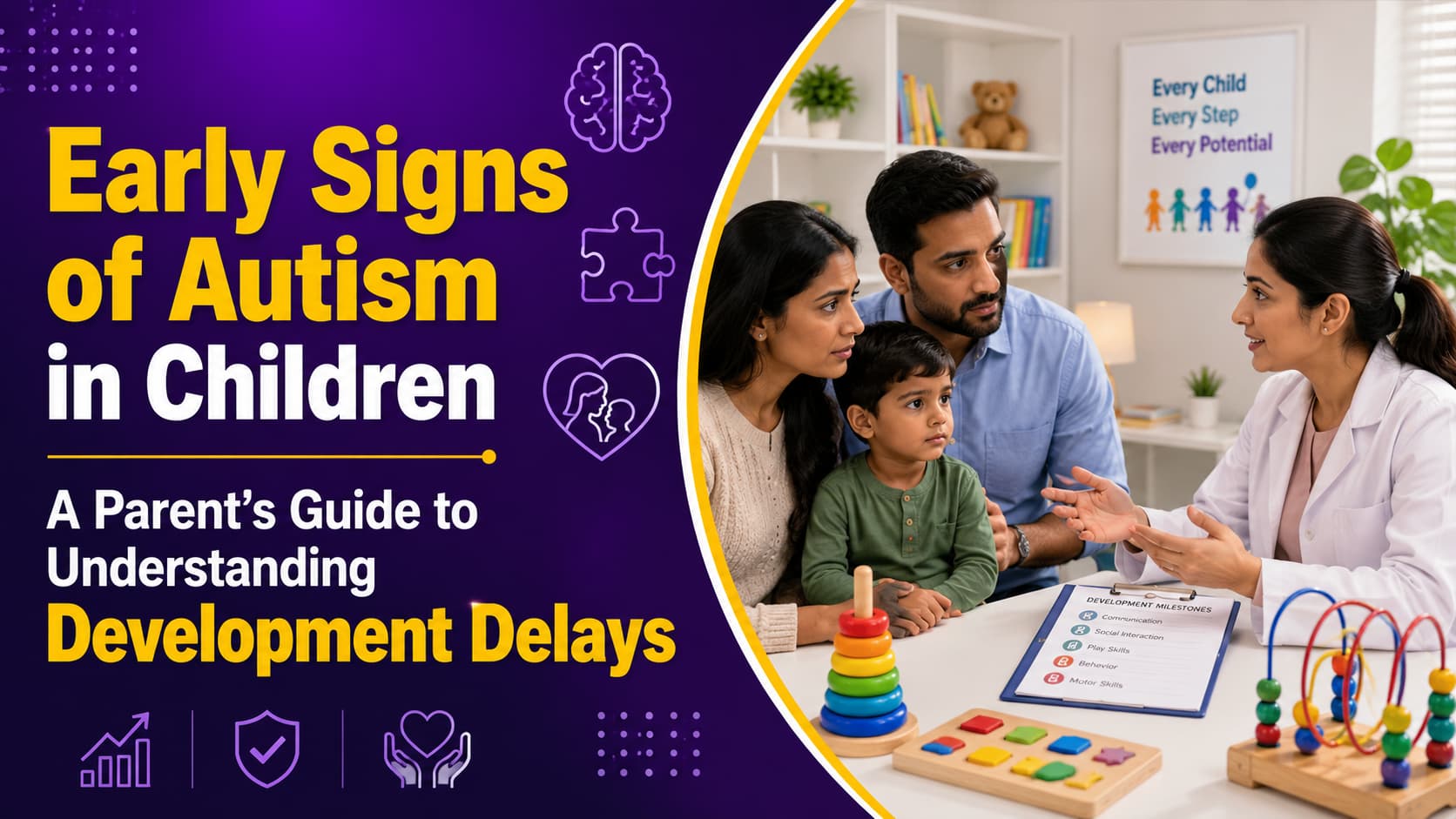
When you first think that something is different about your child you might not be able to explain it.
It may start with a thing that you notice.
You call your childs name. They do not respond.
You want them to look at you. They look away.
You try to play with your child. They seem more interested in things than in people.
Have you seen this in your child?
Times people tell parents things like "Every child grows at their own speed " or "Boys often talk late " or "Just give it some more time."
This advice is not always bad.
Sometimes it means that your child does not get the help they need when they need it.
We do not want to scare parents.
We want parents to understand how their child is growing because knowing about autism early can help children get support.
What Is Autism?
Autism is a condition that affects how children talk, learn, play with others understand things and react to the world.
Every child with autism is unique.
Some children with autism talk late.
Some children with autism can talk well. They have trouble playing with others.
Some children with autism are very good at remembering things. They have trouble understanding what people say.
Some children with autism are very sensitive to sounds, lights or touch.
That is why we should not try to understand autism by looking at one thing.
Many children with autism are also very good at some things.
These good things can include learning from pictures remembering things well seeing patterns thinking creatively focusing deeply talking honestly and following routines.
So when we look at a childs development we should not just look for things that're hard for them.
We should also look for things that they're good at so we can help them learn and grow better.
Dr Ankush Garg (Bio)

Dr. Ankush Garg is an Autism, ADHD, Child Development & Mental Health Specialist in India, Founder of Manovaidya and Creator of the Neuro-Ayurveda Development System.
His work focuses on developmental, behavioural and mental wellness concerns through a structured Neuro-Ayurveda approach that emphasizes personalized guidance, family-centred support and long-term wellbeing.
Early Signs of Autism Parents Should Notice
1. Not Responding to Name
One thing that parents notice is that their child does not respond to their name.
A child may hear sounds fine but they may not answer when you call them.
This is not just because they are distracted.
When a child does not respond to their name for a time parents should pay attention.
2. Not Making Eye Contact
Eye contact helps children connect with others learn and talk.
Some children with autism do not make eye contact.
Some children with autism only make eye contact for a time.
Parents often say, "My child looks right through me " or "My child ever looks at my face."
Have you seen this in your child?
3. Talking Late
Talking late does not always mean that a child has autism.
When a child talks late and also has trouble talking we should look into it more.
Some signs can include not saying words stopping using words they used to say having trouble saying what they need and not imitating sounds.

4. Not Pointing and Not Looking at Others
Looking at others and pointing are skills that help children develop socially.
For example a child sees a plane and points at it while looking back at you.
This simple thing shows that a child is developing socially.
Many children with autism have trouble with this.
They may not point to show interest.
They may not look back and forth between an object and a person.
This is something that parents should watch carefully.
5. Doing the Thing Over and Over
Some children may do things over and over like flapping their hands spinning things lining up toys or doing the same action many times.
These actions are important to the child.
We should not judge them harshly.
We should try to understand them.
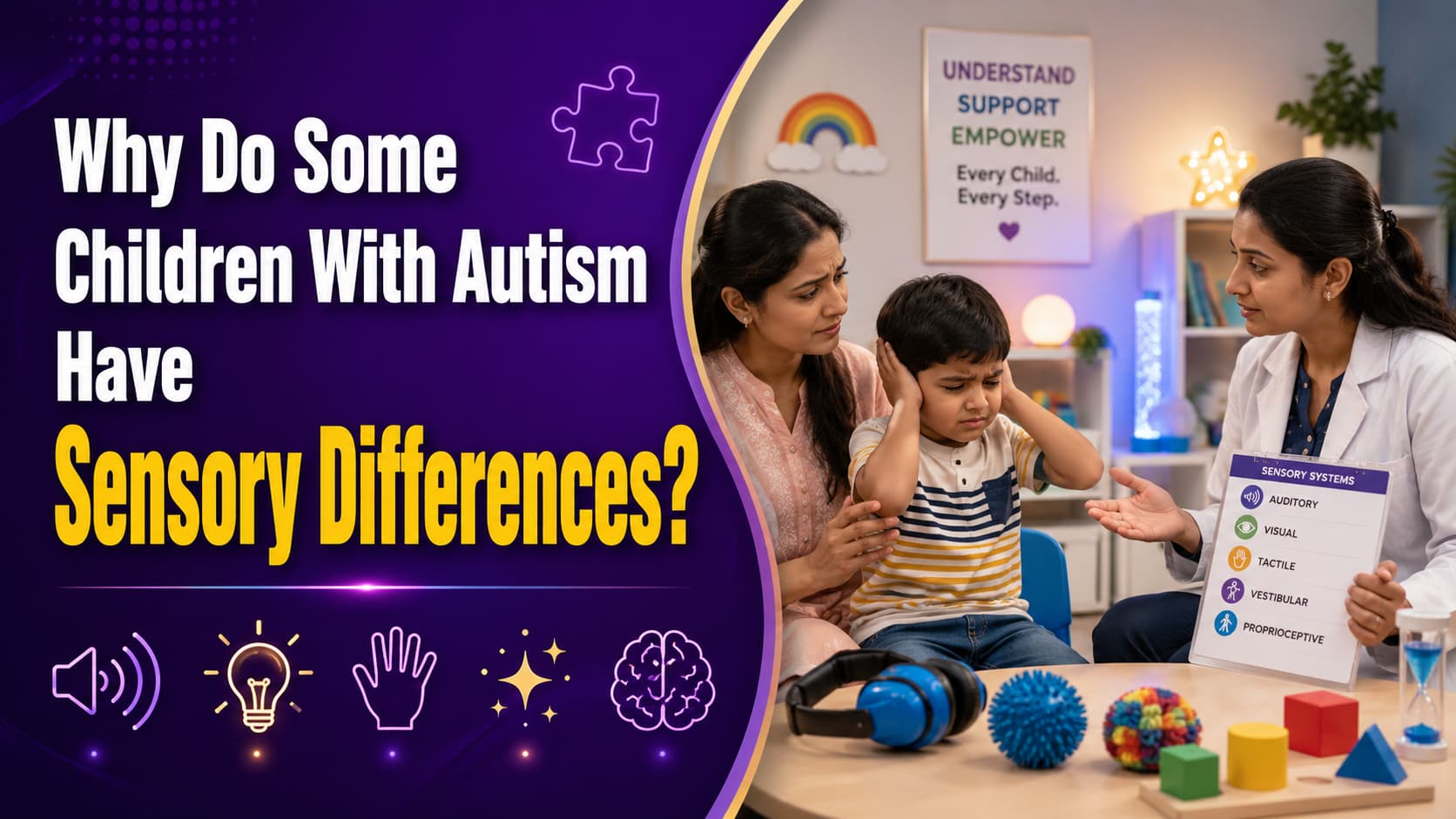
6. Being Sensitive to Some Things
Some children may cover their ears.
Some may not like textures.
Some may get upset by sounds.
Some may want to move around a lot.
Having trouble with sensations is common in autism. It can affect a childs daily comfort, behavior and readiness to learn.
Autism Symptoms by Age
12–18 Months
Some signs can include not responding to their name not making eye contact not pointing, talking late and not playing with others.
18–24 Months
Some signs can include talking not imitating, playing in the same way over and over and not playing with others.
2–3 Years
Some signs can include having trouble talking, behaving and processing sensations and developing slowly.
Quick Autism Signs Checklist for Parents
Use this list to see if you notice any of these things in your child.
□ Does your child rarely respond to their name?
□ Does your child avoid eye contact or make little eye contact?
□ Does your child rarely point to show interest?
□ Does your child talk late or have trouble talking?
□ Does your child prefer playing most of the time?
□ Does your child do the same actions over and over?
□ Does your child get very upset by sounds, lights or touch?
□ Does your child have trouble playing with other children?
If you see three or more of these signs all the time it might be helpful to get your child checked.
Can ADHD Look Like Autism?
Yes sometimes ADHD and autism can look similar when children are young.
Both conditions can make it hard for children to pay attention behave, talk or learn.
There are differences.
Children with ADHD usually want to play with others. They have trouble focusing controlling themselves and sitting still.
Children with autism often have trouble talking looking at others and playing with others.
Sometimes children can have both conditions.
That is why it is important to get an assessment.
It helps parents understand their childs development and what they need.
Why Getting Help Early Matters
Many parents wait for months or even years for their childs symptoms to go away on their own.
Sometimes children do get better.
Sometimes they miss out on important help.
Getting help early helps families understand their childs strengths, weaknesses, talking skills, attention, sensations and readiness to learn.
We do not want to label children.
We want to understand them.
When we understand them we can help them better.
Understanding Development Through the Neuro-Ayurveda Development System
At Manovaidya we understand child development using a system with five parts.
Part 1: Helping the Brain
This part helps with learning paying attention remembering and developing cognitively.
Part 2: Helping the Gut
This part focuses on digestion absorbing nutrients and the connection between the gut and the brain.
Part 3: Helping the Nerves
This part helps with communication pathways being ready to learn and developing.
Part 4: Helping with Sensations
This part helps us understand how children process information from the world.
Part 5: Helping with Behavior
This part helps with controlling behavior following routines and developing behaviorally.
Why Gut Health Is Important
children with developmental concerns also have constipation do not want to eat are picky eaters have trouble sleeping and have digestive discomfort.
The gut and brain are always talking to each other.
When digestion gets better many families see improvements in comfort, sleep and readiness to learn.
That is why gut health is important for supporting child development.
Common Mistakes Parents Make
Many parents accidentally slow down their childs progress.
They might wait long.
They might ignore signs.
They might change treatment plans a lot.
They might focus on symptoms.
They might compare their child to children.
They might track therapy sessions. Not their childs actual development.
These mistakes are common.
Parents do not do them on purpose.
They do them because they are worried, confused and looking for the direction.
Autism or Developmental Delay: What Is the Difference?
Many parents wonder if their child has autism or just a developmental delay.
A developmental delay might affect one area like talking, moving or learning.
Autism usually affects areas, including talking, playing with others behaving and processing sensations.
For example a child with a speech delay might still make eye contact want to play with others and interact socially.
A child with autism might have a speech delay and also have trouble with eye contact talking, playing with others and interacting socially.
That is why it is important to get an assessment before making assumptions.
When Should Parents Get Help?
Parents might want to get help when they notice:
Not making eye contact.
Talking late.
Not responding to their name.
Not playing with others.
Doing the actions over and over.
Having trouble with sensations.
Developing slowly.
Understanding on can create a clear plan, for development.
That plan can help parents support their child with more confidence.
What Should Parents Do Next?
If you notice concerns try not to panic.
Instead take an approach.
Step 1: Write Down Your Concerns
Write down what you are noticing.
Step 2: Get an Assessment
A good assessment can give you clarity.
Step 3: Understand Your Child’s Strengths and Weaknesses
Your child is not a list of symptoms.
Your child also has strengths.
Step 4: Create a Development Plan
A clear plan can help you know what to focus on.
Step 5: Track Progress
The earlier you understand your childs development the easier it is to support them in a way.
Conclusion
The question is not "Does my child have autism?"
The better question is, "Does my child need help with development now?"
Understanding your childs development early can give you clarity and with clarity you can take the right steps to help your child grow learn and move forward with confidence.
Autism assessment and support can be very helpful for children and parents play a role, in their childs development.
The childs development is very important. Parents should do their best to support it.
Autism or not every child needs love, care and support to grow and develop.
Call Us: +91-7823838638 Email: manovaidya2@gmail.com
Frequently Asked Questions
Progress can be seen in talking making eye contact paying attention being ready to learn, behaving, processing sensations and doing things.
Every child is unique.
Progress depends on the childs profile, age, strengths, support system and how consistent the help is.
The goal is not to change who the child is.
The goal is to help the child develop skills and improve their independence and reach their potential over time.
Children may experience speech delays for reasons these may include hearing difficulties, developmental delays, language disorders, limited communication opportunities or individual variations in development.
Sometimes a child may have hearing difficulties or developmental delays that cause speech delays.
However when speech delay occurs along with eye contact poor response to name reduced social interaction, lack of pointing, repetitive behaviours or sensory sensitivities a developmental assessment may be helpful.
This assessment gives parents clarity about the childs needs.
Many early signs of autism can be identified between 12 and 24 months that is why early evaluation is especially valuable.
If parents notice response to name, limited eye contact, delayed speech, lack of pointing, repetitive behaviours, sensory sensitivities or difficulties with social interaction they should consider assessment.
Early assessment does not always mean a child will immediately receive a diagnosis.
It helps families understand the childs strengths, challenges and support needs.
The sooner parents understand the concerns about their childs development the sooner they can create a plan to help their child with communication, learning, behaviour and sensory needs.
Your childs development is very important.
It is a part of how children learn to communicate learn things and connect with others.
When a child looks at something and then looks at someone to share what they are seeing that is attention.
For example a child may point at an aeroplane flying in the sky. Then look back at the parent to share the experience.
This simple behaviour helps children learn to talk, understand interaction follow directions and build relationships.
Some children with autism have difficulty with attention they may not point to show interest they may not look back and forth between something and someone else.
Because joint attention is such an important part of learning and communication difficulty with it can be a sign that a child may need support.
They can make a routine and follow it consistently they can spend face-to-face time with the child they can reduce screen time they can read together they can play with the child they can give the child chances to communicate.
It is also helpful when parents observe and encourage developmental skills for example making eye contact responding to name, imitating sounds pointing to things taking turns and interacting with others.
Parents should focus on progress of comparison every small improvement matters.
When parents are patient, supportive and create a learning- environment the child gets more chances to build confidence and learn new skills.
When home support is combined with a development plan it can help the child make progress in communication, learning, behaviour and social interaction.
.jpg)
.jpg)

.jpg)
.jpg)

.jpg)