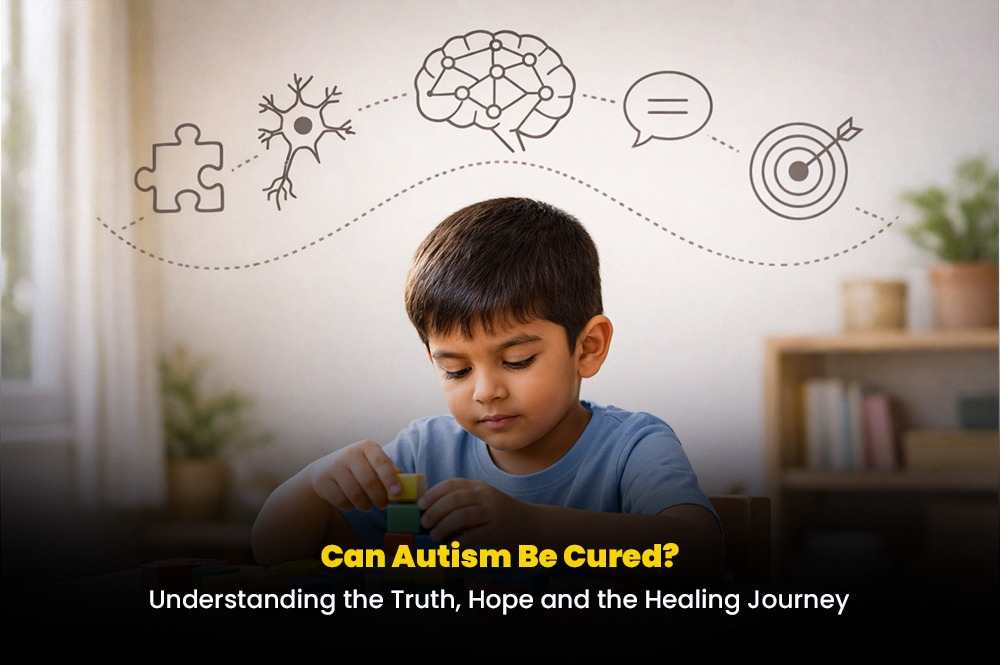
Autism is a term many parents come across and feel confused scared and have questions.
One big question families have is: Can autism be cured?
If you are a parent looking for answers you are not by yourself. Many families go through this. They read articles, talk to experts and try to figure out what the future might be like, for their kid.
The truth is not always easy to understand.. It is good to remember that understanding autism in a correct way can help make progress and bring real improvement.
Let’s look at this topic in a caring way.
What is Autism?
Autism, also known as Autism Spectrum Disorder is a condition that affects how a childs brain grows and understands things.
This means it can be a little different for each child.
Children with autism often have trouble with things like talking to people playing with friends learning things and behaving.
Some kids with autism might start talking
Others might have a time looking people in the eye or making friends.
A lot of kids with autism like to do the things over and over or they like to stick to a routine.
Every child with autism is different.
That is why we call it a spectrum.
Some kids with autism need a lot of help with things but others can do things on their own if they get the right help and support.
Can Autism Be Cured?
This is what a lot of parents want to know.
Now doctors say that there is no magic fix for autism.
It is not like having a cold that gets better when you take some medicine.
Autism is about how the brain grows and understands things.
That does not mean kids with autism cannot get better.
If we do the things to help them a lot of kids with autism can make big progress. To understand how structured brain development programs support this progress, you can explore The 180-Day Neurodevelopment Plan.
They can get better at talking.
They can pay more attention.
They can be calmer. Behave better.
We do not just want to make the label of autism go away.
We want to help kids with autism be able to talk, learn new things, feel happy and safe and be able to do things on their own.
The first step is to understand what is going on with the child and why they have autism.
Why Does Autism Happen?
Researchers are still trying to figure out what causes autism. They think it's because of things that affect how the brain develops.

Some things that might contribute to autism are:
Research from the National Institute of Mental Health explains that autism may develop due to a combination of genetic and environmental factors that affect brain development.
Brain Development Differences
In autism the brain makes connections between brain cells differently. These connections help us talk, behave, pay attention and learn. When the brain makes connections differently it can affect how we do things.
Neurotransmitter Imbalances
Neurotransmitters help brain cells talk to each other. They are like messengers. When they're not balanced kids might have trouble paying attention controlling their emotions or dealing with stuff. Autism can be related to these imbalances.
Gut–Brain Connection
Some research shows that digestion and brain function are connected. If digestion is weak the body might not get the nutrients it needs for brain development.

Many experts also explain how food habits and daily routines affect brain development in children with autism. You can read more in Food & Routine Mistakes for Autism.
This can affect autism.
Environmental and Developmental Factors
Things that happen during pregnancy or how a child eats or develops can affect how the brain develops. This can lead to autism. Autism symptoms can be different in kids because of these factors.
Common Signs of Autism in Children
Autism symptoms usually show up in childhood. They can be different in kids. Kids with autism might have symptoms. Autism affects kids in ways.
Health experts at the World Health Organization say that early signs of autism can often appear during early childhood development.
Some common signs that parents notice are:
• Delayed speech. Not saying many words
• Not looking at people when they talk
• Repeating movements or behaviors
• Not responding to their name or instructions
• Being very active or impulsive
• Having trouble understanding cues
• Really liking routines
In some kids these signs show up slowly.
In others they show up when they miss milestones.
Parents sometimes think these behaviors are issues.
If you're curious about how emotional changes are different, from developmental conditions you can read our guide on sudden mood swings to understand it better.
The Emotional Journey for Parents
Learning your child has autism can be overwhelming. Parents often feel confused, scared, or guilty, wondering if they missed something.
Autism is not caused by parenting. Every child’s brain develops uniquely, and progress comes from understanding how their brain, body, and mind grow together.
Even small changes , better eye contact, calmer behavior, improved attention can be signs of real growth. Supporting digestion, energy balance, and the nervous system, as Ayurveda emphasizes, can create a strong foundation for learning and development.
Being patient, consistent, and compassionate helps children feel safe. Parents also need support, caring for your own well-being helps your child thrive too.
When Should Parents Seek Help?
Getting help early can make a difference for your child.
If you notice that your child is not talking, does not look at you when you talk, has trouble listening or is acting strange you should talk to a doctor or a specialist.
The sooner you understand what is going on with your child the easier it is to help them get better.
Sometimes parents see that their child is feeling sad or upset or acting differently and it can look like they have a mood disorder.
To know the difference between your child just feeling upset and having a psychiatric condition you can read our article about mood swings and bipolar disorder and what is the difference between them.
Knowing the difference can stop you from feeling confused about what's happening with your child with autism.
Treatment Approach: A Structured Healing Framework
When families search for autism treatment options they often find different therapies, diets and supplements.
However many approaches only focus on managing symptoms not on supporting the brains development.

A structured healing approach helps the body and brain from the inside and supports learning from the outside.
This approach has four stages.
1. Gut Detoxification
The first step is to clear blockages in the body.
Sometimes toxins or waste can stop the body from absorbing nutrients and sending signals to the brain properly.
Gut detoxification helps improve digestion and clears these blockages.
When digestion is better nutrients can reach the brain easily.
This step prepares the body for help with the brain.
2. Brain Nourishment
Once digestion improves the next step is to nourish the brain.
The brain needs nutrition to communicate properly.
Proper nourishment helps balance brain chemicals and strengthens thinking.
Over time this can help with attention, emotional balance and communication.
3. Neuron Activation
Children with autism often have connections between brain areas.
Neuron activation helps stimulate these connections so brain signals can travel easily.
When brain communication improves children may show progress in learning, responsiveness and behavior. Ayurveda also focuses on strengthening brain neurons and supporting healthy brain communication in children. Learn more in Ayurveda for Brain & Neuron Support in Kids.
Parents sometimes notice changes first like better eye contact, improved sleep or increased responsiveness.
These changes may seem small. Often mean deeper progress.
4. Strengthening Attention, Control and Memory
The final stage focuses on strengthening brain functions.
Three key abilities are important:
Understanding how memory works in children is also important for improving behavior and learning. You can read about this in Instant Memory vs Processing Memory.
• Attention – focusing and absorbing information
• Control – regulating behavior and reactions
• Memory – retaining and recalling learned information
When these core brain abilities improve children often show progress in communication, learning and social understanding.
This approach supports the brains system rather than just focusing on surface behaviors.
If you want information on autism care you can explore our guide on autism treatment, in Delhi.
Supporting Parents During the Journey
Autism is not something that affects the child. It affects the family.
The Autism journey is a family journey.
Parents often feel worried. Stressed while trying to help their child grow and develop.
Making a home can really help.
There are some things you can do to help:
• having a regular daily routine
• not letting your child watch too much screen
• talking to your child in a calm and gentle way
• being patient with your child as they grow and learn
Parents also need someone to talk to and get emotional support.
For example many parents feel stressed or upset during this time. If you feel this way you might want to read our article on mood swings in women to get some help.
When parents feel like they have support they can do a job of helping their child.
Families can also find helpful autism resources and support programs through organizations like Autism Speaks.
So can you make Autism go away?
The truth is that Autism is not something that you can just fix with one thing.
That does not mean that your child cannot get better.
Many children with Autism can talk better pay attention better feel their emotions and become more independent when they get the right help.
It may take some time to see progress.
You may see changes at first.
If you do things in a way that helps your childs brain, body and mind grow together you can see big changes.
If you are a parent who is going through this remember that you are not alone.
With patience, understanding and the right help many children, with Autism can do things that their families thought they could never do.
Sometimes just knowing what to expect can give you hope.
The Autism journey is a family journey and understanding Autism is the step.
Author Bio

Dr. Ankush Garg
Dr. Ankush Garg is a doctor who knows a lot about Ayurveda. He is a Senior Ayurvedic Consultant at Manovaidya. Dr. Ankush Garg has learned how to take care of peoples health using Ayurveda.
Dr. Ankush Garg runs some clinics. These clinics are Shri Vrinda Ayurveda, LokAyu and Manovaidya Clinics.
Dr. Ankush Garg got trained in Panchakarma from Dhanvantari Ayurveda Chikitsalaya in Dhule. So Dr. Ankush Garg is very good at helping people who are stressed, anxious or depressed. Dr. Ankush Garg also helps people with OCD, ADHD, Autism and other problems related to the brain.
Dr. Ankush Garg is an expert in Nadi Parikshan Agni Karma and old style Ayurvedic treatments. Dr. Ankush Garg likes to find the reason for a persons problem and then treat it. He makes a plan, for each person.
Dr. Ankush Garg also teaches people about wellness. He helps students do better in school by improving their concentration, memory and mental power.
Frequently Asked Questions
Autism is something people live with. With the support children can grow, learn and live happy lives. Autism affects how people think and learn. People with autism need support.
Some parents notice signs of autism before their child is one year old. These signs might include not playing with kids not using hand gestures or reacting strangely to sounds. Every child grows at their pace.
Autism can be tough.. It does not limit what a child can do. Children with autism can live lives.
When these things improve children might get better at talking paying attention and learning. Every child with autism is different. So they need help thats for them. Autism therapy is different for each child.
• not talking all
• not looking at people when they talk
• doing the same things over and over
• not playing with other kids
• not listening to instructions or responding to their name
If these signs keep happening it's a good idea to get professional help. This can help figure out what is going on and what kind of support might be helpful. Getting help early can make it easier for children, with autism to develop and grow.
.jpg)
.jpg)
.jpg)
.jpg)